Pick 4 Grid Systems — Advanced Pattern Analysis
Advanced guide to Pick 4 grid systems including Grid4x4 pattern analysis. Learn how to use grid-based strategies for better number selection.

- pick 4 grid
- grid4x4
- grid systems
- pattern analysis
Introduction to Pick 4 Grid Systems
Pick 4 lottery presents a unique challenge: with 10,000 possible combinations (0000 through 9999), the odds are significantly longer than Pick 3. This is where grid systems become invaluable. By organizing digits and combinations into structured grids, players can visualize patterns, identify trends, and narrow the massive field of possibilities into a manageable set of strong candidates.
Pick 4 grid strategies are considered an advanced technique, and for good reason. They combine multiple analytical dimensions -- positional frequency, digit pairing, and mathematical transformations -- into a unified visual framework. If you have mastered basic rundowns and hot number tracking, grid systems are your next step.
What Is Grid4x4?
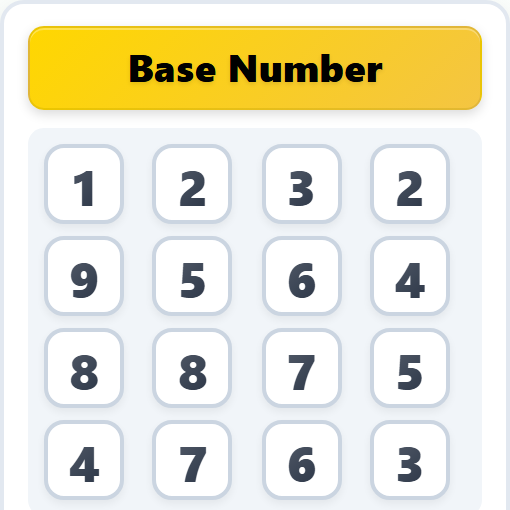
The Grid4x4 system is a pattern analysis method designed specifically for Pick 4 lottery. It organizes the four digit positions into a 4x4 matrix where rows and columns represent different analytical dimensions.
Here is the basic structure:
- Rows represent the four digit positions in a Pick 4 number (Position 1 through Position 4)
- Columns represent analytical categories such as: the last drawn digit, the hot digit, the mirror digit, and the rundown digit for each position
When you populate a Grid4x4 with real data, patterns emerge. You might see the same digit appearing across multiple columns for a given position, suggesting strong convergence. Or you might notice complementary patterns across positions that point to specific four-digit combinations.
Building a Grid4x4 Step by Step
Let us walk through building a Grid4x4 analysis for a concrete example.
Suppose the last Pick 4 drawn number was 3-8-1-6.
Column 1 -- Last Drawn Digits: Simply record the last drawn number: 3, 8, 1, 6.
Column 2 -- Hot Digits by Position: Check the hot number chart for each position. Suppose Position 1 hottest digit is 7, Position 2 is 3, Position 3 is 1, Position 4 is 9.
Column 3 -- Mirror Digits: Apply the mirror transformation (+5 mod 10) to the last drawn digits: 3 becomes 8, 8 becomes 3, 1 becomes 6, 6 becomes 1.
Column 4 -- 369 Rundown Digits: Apply the 369 rundown to the last drawn number: 3+3=6, 8+6=14 keep 4, 1+9=10 keep 0, 6+3=9.
Your completed Grid4x4:
- Position 1: Last Draw 3, Hot Digit 7, Mirror 8, Rundown 6
- Position 2: Last Draw 8, Hot Digit 3, Mirror 3, Rundown 4
- Position 3: Last Draw 1, Hot Digit 1, Mirror 6, Rundown 0
- Position 4: Last Draw 6, Hot Digit 9, Mirror 1, Rundown 9
Reading the Grid for Patterns
Now analyze the grid for pattern analysis signals:
Position 2 convergence: The hot digit and mirror digit for Position 2 are both 3. When two independent analytical methods agree on the same digit for the same position, that is a strong signal. The digit 3 should be heavily favored in Position 2.
Position 3 convergence: The last drawn digit and hot digit are both 1. This digit is both recently drawn and currently trending hot. Another strong signal for Position 3.
Position 4 agreement: Both the hot digit and rundown digit are 9. Two methods pointing to the same digit in the same position.
Based on this grid analysis, a strong candidate might be: ?-3-1-9, where Position 1 requires more analysis (no convergence across columns). You might test with the hot digit (7-3-1-9) or the rundown digit (6-3-1-9).
Advanced Grid Techniques
Once you are comfortable with the basic Grid4x4, you can extend the analysis:
Multiple rundown columns. Instead of one rundown column, add columns for 2-3 different rundown systems (369, 927, 730). When multiple rundowns agree on a digit for a position, the signal is even stronger.
Flip grid overlay. Add a column for flip digits alongside mirror digits. Positions where the mirror and flip transformations produce the same digit are particularly noteworthy.
Historical grid comparison. Build Grid4x4s for the last several draws and compare them. Look for digits that appear as convergence points across multiple consecutive grids.
Pair analysis. Beyond single-digit analysis, look at how digit pairs behave. If Position 1 and Position 2 frequently produce the pair (3, 8) in draws, and your grid shows both those digits in those positions, the pair relationship adds another confirmation layer.
Why Grid Systems Work for Pick 4
Pick 4's 10,000-combination landscape is too vast for simple intuition. Grid systems work because they:
- Organize complexity. Four positions with 10 possible digits each create an overwhelming number of combinations. Grids reduce this to a manageable visual format.
- Reveal convergence. By displaying multiple analytical methods side by side, grids make convergence patterns visible at a glance.
- Support systematic filtering. Start with 10,000 possibilities, apply grid analysis, and narrow to 5-10 high-confidence candidates.
- Enable tracking. Grids create a documented analytical record that you can review and refine over time.
Combining Grid4x4 with Other L Numeris Tools
The pick 4 advanced player does not rely on a single tool. Here is an integrated workflow:
- Run multiple rundown generators for Pick 4 (the platform supports 15+ systems for Pick 4).
- Check hot numbers by position for the Pick 4 game.
- Build your Grid4x4 using the rundown results, hot numbers, and mirror/flip transformations.
- Identify convergence points -- positions where multiple columns agree.
- Generate your final candidates based on the convergence analysis.
- Track results using your own play log to measure how well your grid analysis performs over time.
Each generator use costs just 1 credit, so running the 3-4 generators needed for a thorough Grid4x4 analysis is both fast and affordable.
Getting Started with Grid Analysis
If you are new to grid systems, start simple:
- Build a basic Grid4x4 with just four columns (last draw, hot digit, mirror, one rundown)
- Focus on identifying positions with clear convergence (two or more columns agree)
- Play only the combinations where you see strong convergence
- Track your results for at least 20 draws before evaluating performance
As you gain experience, add more columns, incorporate flip grids, and experiment with pair analysis. Grid systems reward patience and consistency -- the more data you feed into them, the more useful they become.
Try our Pick 4 Generator to start building your Grid4x4 analysis, or Try L Numeris. Take your Pick 4 game to the advanced level with structured, data-driven grid analysis.
Keep Exploring
Ready to Stop Guessing?
Join players using data-backed strategies. Choose a plan or a one-time credit pack — whichever fits how you play.
✓ Plans and one-time credit packs • Cancel anytime